A practical place to begin
Radishes are quick, but quick does not mean automatic. A crowded row can produce impressive leaves and very little root. A sowing left too long can become woody before anyone notices. The useful skill is matching a small sowing to a mild growing window, then checking roots before the packet date becomes a deadline.
Grow tender salad radishes in batches small enough to eat promptly. Distinguish quick salad types from larger winter radishes, which need different spacing and a longer growing period.
Choose the position and prepare
Choose useful sunlight and a moisture supply you can maintain. Very hot conditions can make a mild-season sowing disappointing. Move a container away from intense reflected heat if the crop is struggling.
Use a draining container deep enough for the selected variety, a fine potting mix, labels, and a gentle watering rose. Long-rooted varieties need more depth than round salad types.
Direct sow at the packet depth and thin early to the recommended spacing. Disturbing the root after establishment is less useful than starting in place. Keep a record of the variety so harvest expectations match its shape.
A manageable care routine
Keep moisture reasonably even through root development. Alternating drought and heavy watering can impair quality. Test below the surface rather than assuming a brief shower has soaked a full container.
Avoid adding unnecessary nitrogen to a fresh fertile mix. Excess leafy growth does not guarantee root enlargement. Check spacing, variety, and season before reaching for a stronger fertilizer.
Inspect the shoulders of developing roots and lift one when it approaches the expected size. Harvest promptly once quality is good. Sow another short row instead of allowing all the crop to mature on the same day.
Observe before changing the plan
Large tops with thin roots can reflect crowding or unsuitable growing conditions. Small holes in foliage need pest identification, but a few cosmetic bites do not necessarily ruin the crop. Inspect roots before deciding whether protection is needed.
Sow equal short rows at two intervals and taste at comparable root size. Record tenderness rather than judging only by days from sowing. The most useful local harvest window may be shorter than expected.
Adapt and renew
Use regional sowing advice and variety descriptions to choose mild-weather windows. Some winter radishes are sown later for cool-season harvest; do not apply the salad-radish schedule to every seed packet.
Pull the crop you need, remove damaged roots, and clear the remaining row once it passes its best. Wash thoroughly before eating. Refill gaps with a different suitable short crop if repeated sowings begin attracting persistent pests.
Choose the kind of radish you mean
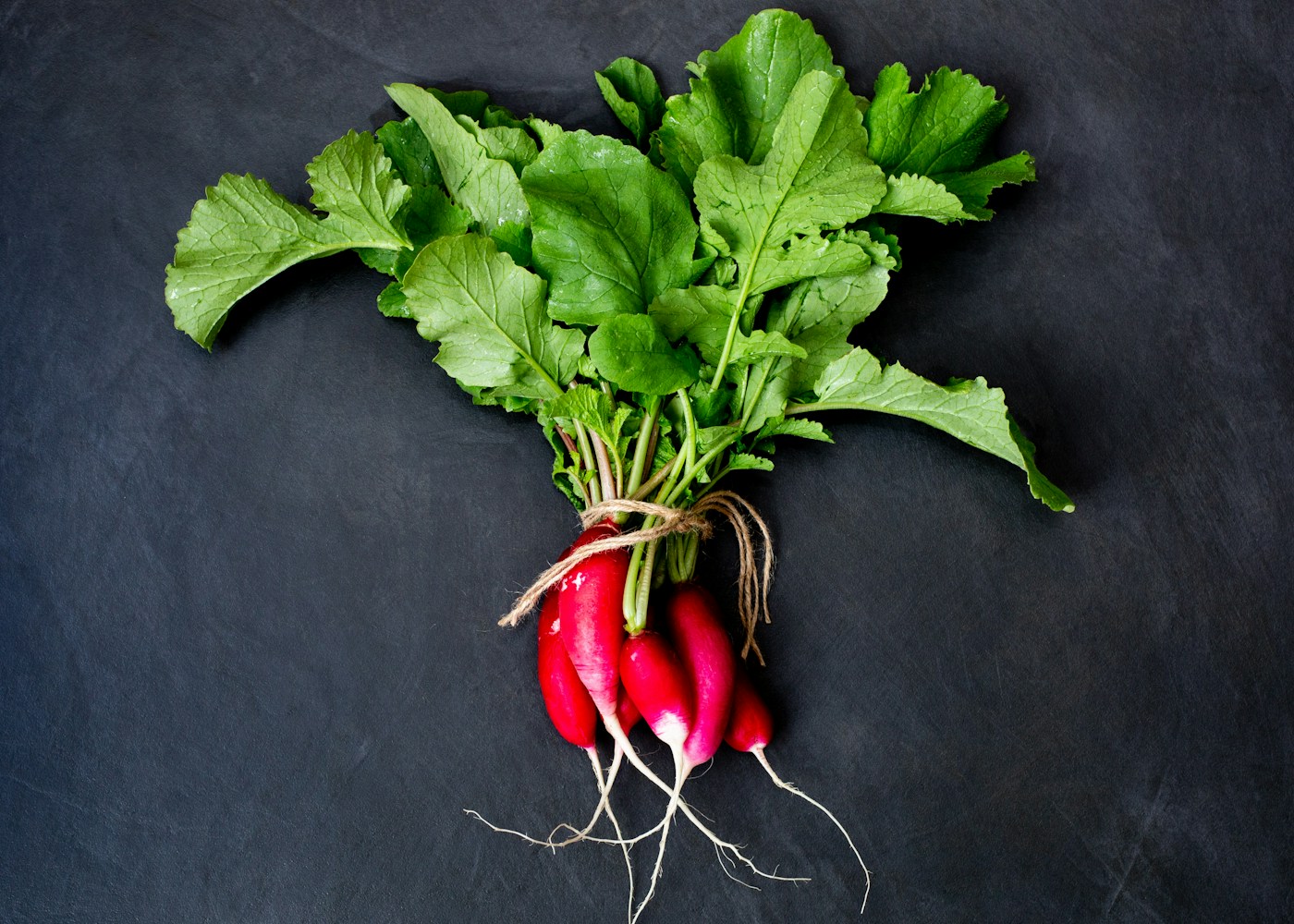
The name radish covers crops with very different sizes and growing periods. Small round salad radishes are usually grown quickly for tender roots. Long winter types can need much more space and a different sowing window. Read the packet before choosing a container or promising a harvest date. A photograph of a large root is not evidence that it will develop well in a shallow box.
For a first small-space crop, choose a familiar salad type suited to local conditions. Keep the sowing modest enough to eat promptly once ready. A whole packet can produce more roots than a household wants during their best few days, and leaving surplus in place does not preserve quality indefinitely. A short row repeated later is usually more useful.
Keep the packet until the crop finishes. Expected root shape, spacing, and sowing guidance help diagnose problems. If a long variety bends near the bottom of a pot, the container depth is relevant. If a round variety remains thin in a crowded row, spacing may be the more useful starting point. Accurate identity makes the rest of the growing process easier to interpret.
Use spacing as part of root formation
Radish seedlings can look vigorous while competing too closely to form useful roots. Thin early according to the variety and intended harvest. In a small pot, it may feel wasteful to remove healthy seedlings, but keeping every one can waste the entire growing period. Snip unwanted plants where pulling would disturb close neighbours.
Direct sow into the final growing position with a fine, gently levelled surface. Large clods or chunks immediately around the seed can make establishment uneven. Water carefully so seed does not collect in one depression. If seedlings emerge in a dense patch, correct that density rather than waiting for the roots to sort themselves out.
Leave a small labelled gap between sowings. It helps distinguish batches and makes later harvest easier. Resist filling every empty space with additional seed. The roots need room below ground, and the gardener needs to see how they develop. A well-spaced short row gives better information than a crowded mixed patch where no one remembers when each plant was sown. Good spacing is an active growing decision, not an optional finishing touch.
Keep the growth steady
A quick crop has little time to recover from repeated interruptions. Check moisture through the root zone and avoid allowing a small container to swing from very dry to saturated. A sunny windy day can dry the mix faster than expected even in mild weather. Conversely, cool cloudy conditions can leave a pot wet long after the surface begins to change colour.
Use a growing medium with suitable fertility rather than repeatedly adding strong feed. If the leaves are large but roots are disappointing, first examine spacing, season, and variety. More nitrogen can reinforce leafy growth without solving the root problem. Record any feeding so a later diagnosis has a clear history.
Hot conditions can make salad radishes pungent, woody, or quick to flower, depending on variety and stress. If local guidance recommends a cooler sowing window, follow that rather than trying to overcome the season with water alone. A movable container offers some flexibility, but a shaded location must still provide enough light. Sometimes the best decision is to finish the current small sowing and wait for a more suitable period.
Taste before the calendar tells you to
A maturity figure on a seed packet is a rough comparison under suitable conditions. Begin checking the roots as they approach the expected size, and lift one to assess texture and flavour. The shoulder visible above the mix may help, but it does not reveal the whole root. A small sample is more informative than waiting until every plant looks large.
Harvest in a sequence rather than leaving the entire row until one planned weekend. Take the roots that are ready and give the smaller ones a little more time only while conditions remain suitable. If quality has already declined, clear the batch rather than hoping prolonged watering will make an old root tender again.
Use the result to adjust the next sowing. If one short row supplies several meals in rapid succession, sow less next time or divide the sowing dates. If roots are consistently too small before hot weather arrives, begin earlier within the local safe window or choose a more appropriate variety. The aim is not to reach the largest possible root; it is to pick a root worth eating at the moment you need it.
Inspect damage without overreacting
Radish leaves may show small holes from feeding insects while the root remains usable. Inspect the plant and identify the cause before treating. A few cosmetic marks do not automatically justify spraying, especially on a crop close to harvest. If protection is needed, use a suitable physical barrier or a locally approved labelled treatment and follow all instructions.
Wash harvested roots thoroughly under clean running water and remove damaged or decayed portions appropriately. Keep harvest tools and hands clean. Do not assume that a crop grown in a pot is protected from contamination by pets, birds, or dirty runoff. Choose the container position with those exposures in mind.
When the sowing ends, clear old plants and look at the pattern of success. Were the best roots at the edge where spacing was greater? Did one side dry faster? Did pests arrive only after several repeated sowings in the same place? These observations guide practical changes. Rotate crops or follow local pest advice where needed, and make the next sowing small enough to observe closely. A radish crop is quick enough to be a useful experiment when its details are recorded.
Use one lifted root as information
A row of radishes has reached the packet’s approximate maturity period, but the visible shoulders are uneven. Lift one of the larger roots and assess it. If it is tender and the flavour suits you, begin harvesting the ready roots rather than waiting for the smallest plants to catch up. If it is already woody, record that the useful harvest came earlier under these conditions.
Look at the smaller plants before deciding they need more feed. Are they crowded, shaded, or in a part of the container that dries differently? The pattern can reveal a practical cause. Thin roots beneath large leaves do not automatically indicate hunger. If the weather has become hot, the crop may be outside its best window regardless of the fertilizer supply.
Use the next sowing to test one clear change, such as more appropriate spacing or a smaller batch timed for milder conditions. Keep variety and other care consistent where practical. At harvest, compare texture and usable yield rather than only size. A short row of tender roots picked promptly is more valuable than a large row left too long. Clear the old stand when quality has passed, wash the harvest thoroughly, and avoid treating the remaining green tops as a reason to postpone the next useful decision. The crop is quick enough to teach a clear lesson when its details are observed.
Further reading
Horticultural references for continued learning: