A practical place to begin
Parsley asks for patience before it asks for much harvesting. Its seedlings can appear slowly, leaving a pot that looks empty while other herbs are already growing. A labelled sowing, steady moisture, and restraint with the first cuts turn that uncertain beginning into a useful kitchen plant.
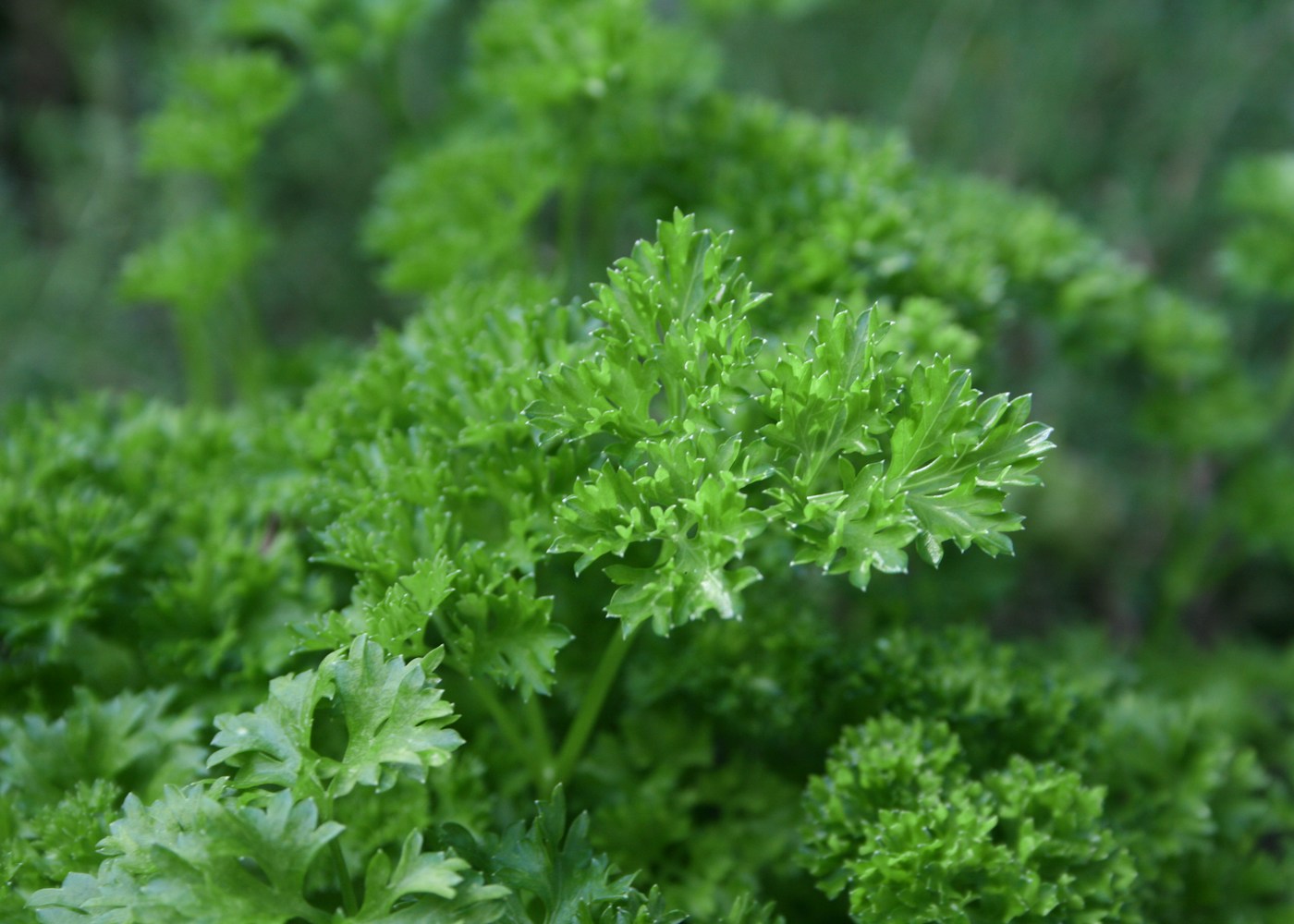
Choose flat-leaf or curly parsley for the flavour and texture you enjoy. Treat it as a leafy culinary crop with a limited productive life, rather than assuming one planting will remain tender forever.
Choose the position and prepare
Use good light with some protection from extreme heat where needed. A bright outdoor position is generally more productive than a distant indoor shelf. Keep the seed pot where slow emergence will not be forgotten.
Use fresh labelled seed, a draining pot or modules, suitable sowing mix, and a gentle watering rose. A transparent cover can help retain moisture during germination if ventilation and temperature are managed.
Sow at the packet depth and keep conditions steady through the often slow germination period. Remove covers after emergence and provide enough light. Thin or pot on young plants before roots become badly congested.
A manageable care routine
Maintain moisture without leaving the mix constantly saturated. Small seedlings have little reserve if the surface dries, while mature plants benefit from a thorough watering that reaches the root zone and drains freely.
Use a suitable growing medium and modest feeding during active growth if needed. Follow edible-herb product instructions. Increasing fertilizer does not make old or crowded plants return to a youthful growth habit.
Take outer stems close to the base and leave the centre growing. Harvest from several plants rather than stripping one. Remove yellow or damaged leaves so the useful young growth stays easy to see.
Observe before changing the plan
A tall flower stalk signals a change in the plant cycle, often in its second season. Bolting plants are not failing through lack of effort. Start replacements before the old stand becomes coarse and sparse.
Sow a small backup pot while the main crop still looks healthy. Record emergence and the point at which picking becomes sustainable. This gives a realistic replacement schedule for your own light and temperature.
Adapt and renew
Parsley is biennial, usually grown for leaves before flowering. Local cold, heat, and day length shape its timing. In a protected position it may remain useful longer, but flowering still changes the harvest.
Use only correctly identified culinary parsley and wash leaves before cooking. Do not forage lookalike plants to fill a gap. Keep a labelled replacement batch so patience at sowing time does not become a long absence from the kitchen.
Make the slow beginning visible
A parsley pot can look empty long enough to lose its place in the watering routine. Label the sowing date and variety clearly, and keep the container somewhere you will inspect it. Use fresh seed from a reputable supplier and follow the packet’s germination guidance. Avoid promising an exact emergence day, because temperature, seed age, and other conditions affect the result.
Maintain moisture gently without saturating the mix. If using a temporary cover, monitor heat and ventilation and remove it at the appropriate stage. Once seedlings appear, provide adequate light so they do not stretch weakly. Do not repeatedly disturb the surface to look for progress; emerging roots are easily damaged.
A backup sowing can be sensible, but mark it separately rather than adding more seed to the same unlabelled pot every few days. Otherwise the final stand contains several ages and becomes difficult to thin. Patience is easier when the process is recorded. A short note saying when and how the seed was sown prevents uncertainty from turning into constant unnecessary intervention.
Choose leaf form for the way you cook
Flat-leaf and curly parsley differ in appearance and kitchen use, and individual varieties can vary further. Choose a named culinary type you expect to use rather than growing one only because it is familiar in a garnish. Keep its label through the season so a successful choice can be repeated.
Use only correctly identified parsley. The broader family includes plants that should not be treated as edible lookalikes. Do not replace a missing crop with an unknown wild plant because its leaves appear similar. Buying labelled seed or healthy named plants provides a clear starting point.
Give the young plants enough room to form a useful leaf canopy. Thin or pot on before they become badly congested, following the chosen growing method. A dense nursery pot may provide a short immediate harvest, but a longer-lived plant needs suitable root space. Decide which role the pot is meant to play. Growing a few strong plants for repeated stems is different from using a crowded short-term bunch, and both are easier when expectations match the actual planting.
Harvest stems without emptying the centre
Once plants are established, take outer stems near the base and leave the developing centre intact. Use clean scissors or a careful cut that does not tear neighbouring growth. Picking only the leaflets from many stems can leave an awkward framework, while stripping every outer stem at once can slow recovery. Begin modestly and observe regrowth.
If a recipe needs a large quantity, harvest from several plants. A backup pot allows each plant time to rebuild useful foliage. The amount available changes with light, temperature, and root volume, so do not expect a winter windowsill plant to replace leaves as quickly as an outdoor plant in a favourable growing period.
Remove yellow or damaged leaves separately from the kitchen harvest. This keeps the centre visible and makes pest inspection easier. Wash edible leaves under clean running water before use. If treatment is needed, use only a product labelled for the crop and setting, with the correct harvest interval. Do not assume an aromatic herb is exempt from ordinary food hygiene or that a homemade spray is safe merely because it uses household ingredients.
Understand the second-season change
Parsley is biennial, and a plant that has provided leaves may later shift toward flowering. A tall central flower stalk is part of that life cycle, not proof that the gardener failed to feed enough. Leaf quality and the convenience of harvesting can change. Cutting the stalk does not guarantee a return to the same youthful leafy crop.
Plan replacement before the old plant becomes the only source. Because germination and establishment can be slow, start a modest new batch while the current one still looks useful. Keep it in separate root space so it is not shaded and outcompeted. This overlap reduces the temptation to overharvest a declining plant.
Local conditions influence how long the leafy stage remains useful. Cold, heat, day length, and protection all matter, so a calendar from another region is only a starting point. Record sowing, first harvest, and flowering for your own position. Over time, that gives a practical renewal schedule. The aim is continuity of good leaves, not preserving one old plant indefinitely regardless of what stage it has reached.
Use moisture and position to guide care
A parsley plant in active growth needs a consistent root environment. Check the mix and water thoroughly when appropriate, allowing excess to drain. Do not leave an ordinary pot standing in water simply to avoid future checks. A small container near hot glass or exposed to wind may dry much faster than one in a sheltered outdoor position.
If leaves wilt, distinguish dry mix from wet-root stress before reacting. If growth is pale and weak, assess light and crowding as well as nutrition. Feed modestly according to the medium and a suitable edible-herb product label. Strong fertilizer cannot compensate for a dark position or restore a plant that has moved into flowering.
At the end of the crop, review the entire sequence. Was the sowing kept moist long enough? Were seedlings thinned before congestion? Did harvesting leave a functional centre? Was the replacement started in time? These questions lead to concrete improvements. Parsley becomes much easier when its slow start and limited leafy life are planned for. A few labelled plants at different ages can provide a more dependable supply than one crowded pot expected to remain productive forever.
Start the replacement while the old plant is useful
Parsley often creates a gap because the next sowing begins only after the old plant bolts. By then, germination and establishment still lie ahead. A better plan is to begin a modest backup while the main pot remains productive. Keep it labelled and in separate root space so the young plants receive light rather than growing beneath the old canopy.
Continue taking outer stems from the established crop without stripping it. As the new plants develop, reduce pressure on the old ones and observe whether their growth is still worth maintaining. A flower stalk marks a change in life cycle, and replacing the leafy crop at that point is a planned transition rather than a failure.
Keep notes on how long the backup took to become useful in the actual season. That interval may differ between a bright warm period and a dim cool one. Use the observation to improve the next renewal schedule. Do not turn it into an exact annual date that ignores conditions. The aim is a small overlap that prevents the kitchen supply from depending on one aging plant. If space is very limited, grow fewer strong replacements rather than a crowded tray with no final destination. Patient establishment and measured harvesting make parsley dependable without requiring a large collection of pots or constant intervention.
Further reading
Horticultural references for continued learning: