Build the future shape while the plant is small
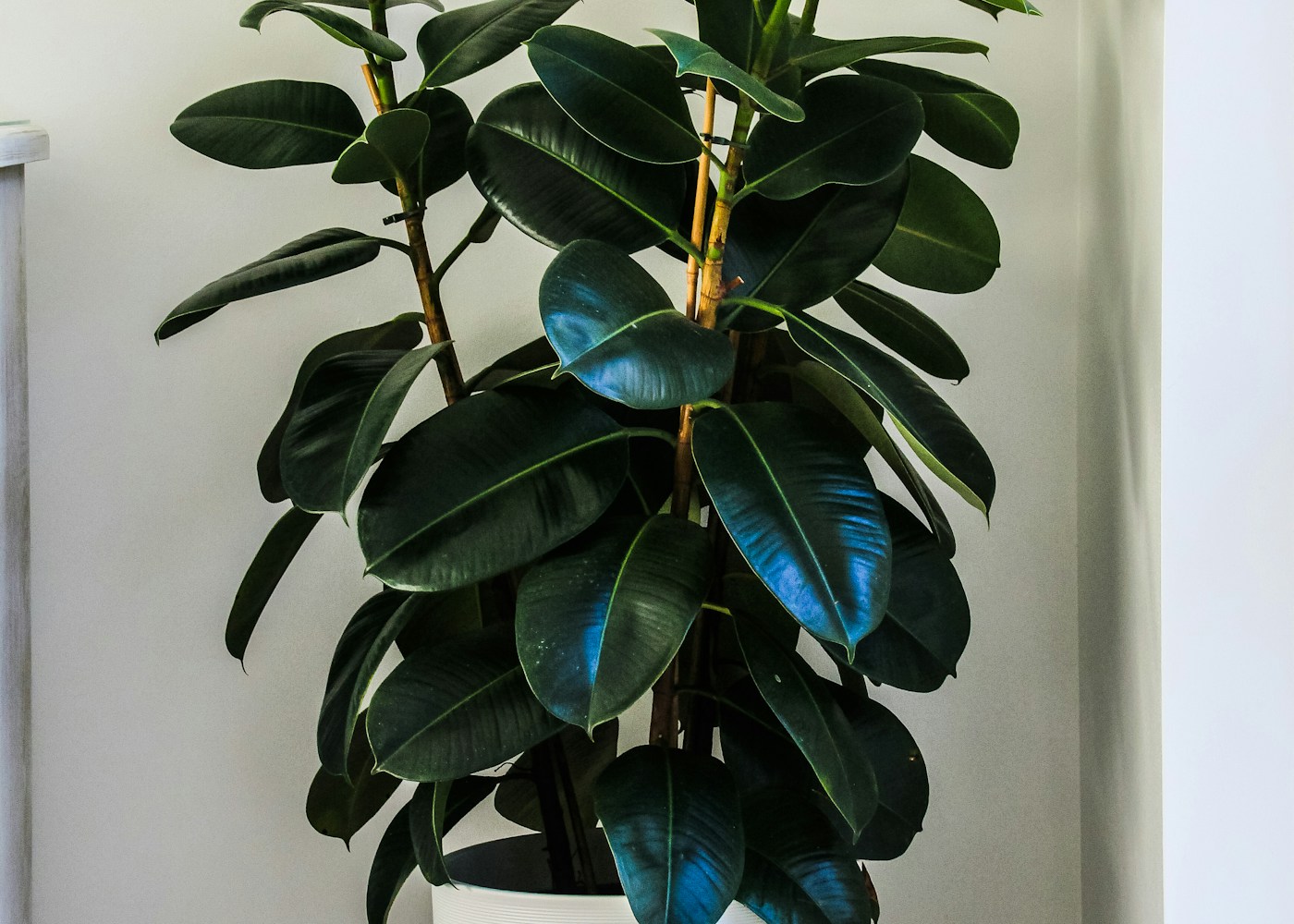
A rubber plant can become a substantial indoor tree. Ficus elastica begins with a few glossy leaves on a manageable stem, but healthy growth can eventually put the newest leaf well above eye level. Keeping it upright involves more than inserting a cane when it starts leaning. Light direction, root stability, pruning choices, and the amount of room around the foliage all influence its architecture. Decide early whether you want one tall stem or a lower branching specimen.
Look at the plant's growing tip before buying. A sound tip provides a clear route for continued extension, while a previously cut tip may already be developing side shoots. Neither is inherently better; they simply suit different shapes. Check that stems are firm and roots are not sitting in trapped water inside a decorative sleeve. A large flawless leaf is appealing, but a stable root system and suitable growth points are more valuable over the following years.
Give a tall plant a bright growing position
Rubber plants generally appreciate bright light, with protection from abrupt exposure to strong sun. A broad green-leaved cultivar may tolerate somewhat less light than a heavily variegated one, but neither should be expected to grow well in a dark corner indefinitely. Look for a position near a substantial window where the upper and lower foliage both receive daylight. A skylight can be useful if the temperature stays comfortable and the plant is not scorched.
Rotate a young symmetrical plant gradually if you want balanced growth, rather than allowing it to lean continuously toward one side. Once a large tree has been trained for a particular location, constant rotation may be impractical; instead, give it a stable position with adequate light across its canopy. Leave space between leaves and glass. Cold panes, heater blasts, and doors that admit winter air can damage foliage even when the rest of the room seems suitable.
Use support to guide the stem, not restrain it
A slender young stem can benefit from a stake while it thickens. Place the support close enough to help without rubbing the bark, and fasten the stem using broad soft ties. Check ties regularly so they do not constrict expanding tissue. There is no need to bind every leaf stalk or hold the stem completely motionless. The aim is to prevent collapse and excessive bending while the plant establishes a stronger structure.
If the tree leans because its pot sits unevenly or its roots occupy only a small part of a huge container, a taller stake will not address the cause. Check the surface beneath the pot, the firmness of the root ball, and whether the container is proportionate. A heavier outer pot can improve stability without adding unnecessary wet growing medium. Keep tall plants clear of door swings and routes where leaves are repeatedly caught on clothing or bags.
Water deeply, then check the drying zone
Allow the upper layer of the potting mixture to dry before watering again, checking farther down in a deep pot. Thick leaves do not mean a rubber plant wants permanent drought, but consistently wet roots can also fail. The appropriate interval depends on light, temperature, root density, and container material. A tree near a warm bright window may use water more rapidly than the same tree after a move into a cooler room.
When watering, wet the root ball evenly until excess drains, then empty the saucer. Large leaves often overhang the pot and make pouring awkward; use a narrow-spouted can to reach the mixture without flooding leaf joints. If the container is too heavy to move, use a waterproof saucer you can empty safely. A concealed pool at the bottom of a cachepot can persist unnoticed. Inspect it directly instead of assuming drainage holes alone keep the roots safe.
Repot without burying the trunk
Consider repotting when roots densely occupy the pot, water becomes difficult to distribute, or the root ball dries extremely quickly under otherwise suitable conditions. Move up a modest size. A deep decorative vessel filled with unused mixture can stay wet long after the roots have enough water. Use a draining inner pot and a fresh airy houseplant mix that retains moderate moisture. Garden soil can compact indoors and is not a dependable substitute.
Support the root ball as you remove it, especially on a tall plant whose stem creates leverage. Gently loosen crowded outer roots while preserving healthy structure. Keep the trunk at its previous planting depth rather than burying it to disguise a lean. Firm the mixture enough to hold the plant without compressing it into a solid mass. Water after repotting, then learn the new drying behavior before returning to any previous routine.
Prune at the height where branching makes sense
Removing the growing tip can encourage buds below the cut to develop, though the number and direction of branches vary. Choose a cutting point with the future room layout in mind. If a tree is already nearly at the ceiling, a tiny trim just below the top may produce branches that immediately crowd the ceiling again. A lower deliberate cut can be more useful, even if the temporary appearance feels severe.
Prune during an active growing period when possible, using a clean sharp tool. Rubber plant sap is milky and can irritate skin or stain surfaces, so wear gloves if needed and protect the floor. Keep sap away from eyes, children, and pets. Wipe it carefully rather than spreading it over the foliage. Avoid removing most of the canopy from a weak plant before correcting poor light, damaged roots, or a significant pest problem.
Propagate a stem rather than a decorative leaf
A rubber plant leaf can sometimes form roots without producing a new growing stem if it lacks the necessary node and bud. For a viable new plant, include a suitable section of stem. A short cutting with a healthy node is easier to support than an oversized top with several heavy leaves. Propagation methods vary, and latex sap makes clean preparation important. Keep the rooting environment warm, bright, and free from harsh sun.
Air layering can be useful on an overly tall woody specimen because roots develop on the stem while it remains attached to the parent. It requires a carefully prepared wound, a moist rooting material, and time for a substantial root system to form before separation. This is more involved than ordinary repotting. If you are unfamiliar with the technique, follow a detailed horticultural guide rather than cutting deeply around the trunk without a plan for maintaining moisture and support.
Read leaf loss from the bottom upward
One oldest leaf yellowing gradually can be ordinary aging. Several leaves dropping after a sudden move may reflect environmental stress, while repeated lower-leaf loss combined with stretched growth often points toward insufficient light. Persistently wet mixture, a cold draft, or prolonged drying can also contribute. Examine the timing and distribution instead of treating every dropped leaf as evidence that the tree needs feeding.
A rubber plant does not normally replace leaves at the same old scars along a bare trunk. New branching may change the outline, but an empty lower stem will not instantly refill after a brighter move. Decide whether the bare trunk is acceptable as part of a tree-like shape. If not, planned pruning or propagation may create a more satisfying plant. That choice is structural, and it should be made after the plant is growing soundly again.
Keep glossy foliage clean without adding gloss
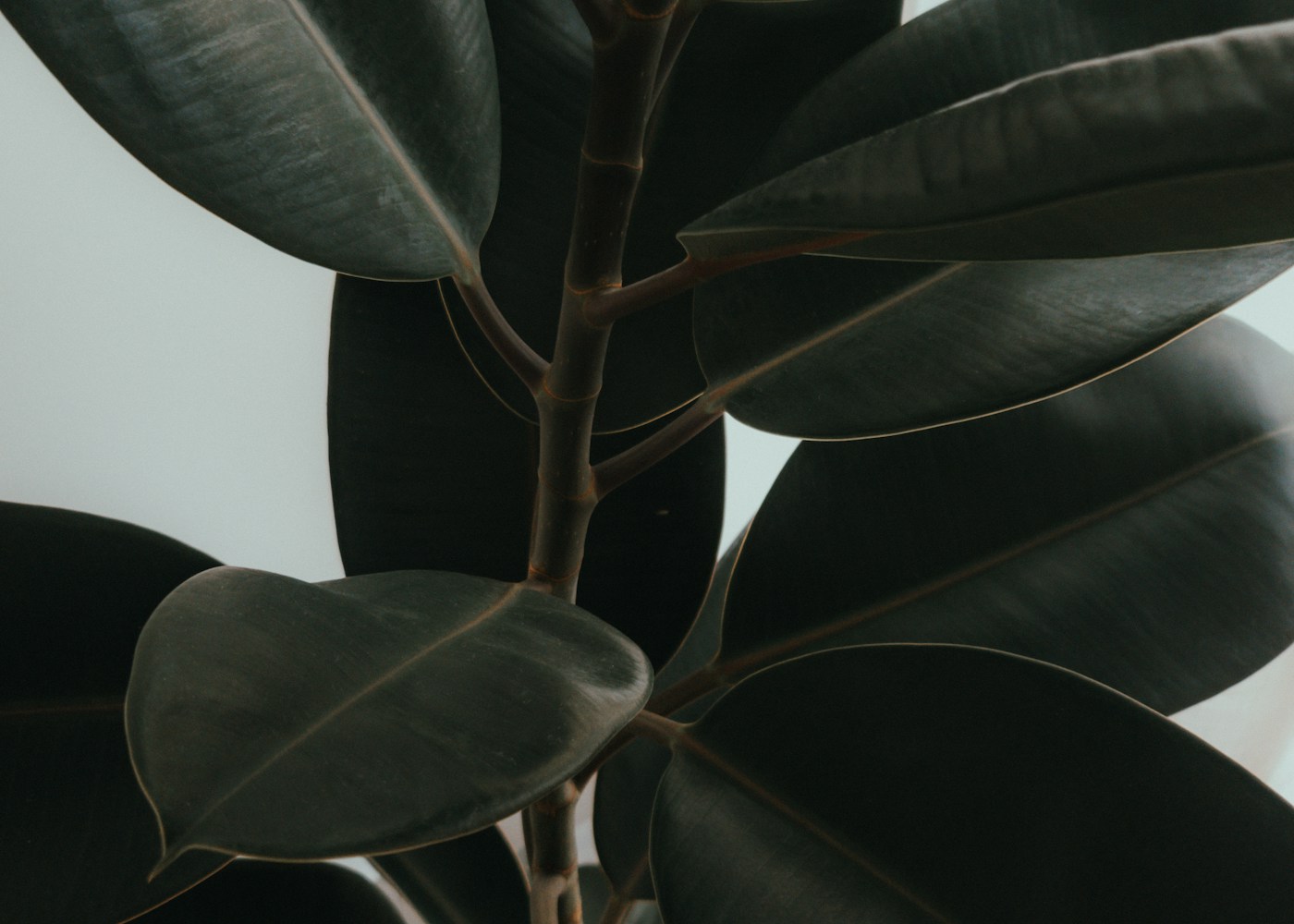
Use a soft damp cloth to remove dust, supporting each leaf from beneath. Clean the upper surface gently and inspect the underside at the same time. Oil, mayonnaise, and other homemade polishing mixtures can leave residues that attract dust or interfere with treatment later. Naturally healthy rubber leaves already have a characteristic sheen. Their appearance improves most reliably through cleaning and suitable growing conditions.
Watch for scale insects along veins and stems, mealybugs in protected joints, and fine stippling or webbing associated with mites. A large canopy can hide problems until several leaves are affected. Isolate a suspect plant and identify the pest before choosing a labeled treatment. Cleaning tools and cloths between plants reduces accidental transfer. Do not apply a strong spray to every leaf without considering light, temperature, and the product's directions, since tender new growth can mark easily.
A plan for an uneven young tree
Suppose a rubber plant has grown toward a side window until its stem angles across the room. Move the pot into a brighter balanced position, check that the root ball is firm, and add a temporary support with loose ties. If the height still suits the room, allow new growth to strengthen before making major cuts. If it is too tall, prune at a deliberate branching height during active growth. Monitor moisture after the change because a reduced canopy may use less water. Feed moderately when growth resumes, and assess the emerging structure over several new leaves rather than expecting the old leaning section to straighten completely.
Leave room for the newest leaf to unfold without touching a curtain or shelf. The emerging leaf is enclosed in a sheath and can be marked while soft. A torn or creased new leaf may remain imperfect even after the plant resumes healthy growth. Do not pull the sheath apart to accelerate opening, and avoid turning the growing tip into a handle when moving the pot. If space above the plant is limited, plan pruning before each new leaf reaches the obstacle. Preventing repeated physical injury is easier than diagnosing its permanent marks later.
Further reading
Horticultural references for continued learning: