
Start with the plant and the place
A dusty leaf is a useful invitation to look more closely at a plant. Cleaning can reveal scale insects, webbing, old damage, or an unnoticed new shoot. The method should fit the foliage: a broad rubber plant leaf can be supported and wiped, while a delicate fern or fuzzy leaf needs a gentler approach. The goal is a clean natural surface, not a showroom shine.
Inspect before cleaning
Dust, pest residue, mineral deposits, and natural leaf markings are different things. Wiping everything away can remove evidence needed for identification.
Look at a mark from more than one angle. Loose dust usually sits differently from a fixed scar or a natural silvery pattern. Sticky residue can point toward sap-feeding insects, while small pale deposits may follow repeated splashing with mineral-rich water. Check the underside and the stem junction before wiping. If you find an organism, obtain a reliable identification and separate the plant if appropriate. Cleaning a suspected pest away without documenting it can make the next decision harder. A quick inspection also prevents you from rubbing a normal fragile surface as though it were dirt.
Examine both sides and photograph unusual marks first.
Use plain gentle materials
A soft cloth dampened with water is suitable for many broad smooth leaves. Oils, mayonnaise, and household furniture polish are unnecessary.
Prepare a bowl of clean water and a soft lint-free cloth. The cloth should be damp rather than dripping when working over a pot or furniture. Rinse it frequently so grit is not dragged across several leaves. Household polish, cooking oil, and mayonnaise add a coating without addressing the growing conditions. A product advertised for leaf shine may also be unsuitable for some foliage, so its label matters. When plain gentle wiping removes ordinary dust, there is little reason to add another substance. Keep cleaning materials separate from cloths used with household chemicals.
Choose a clean cloth that will not scratch and rinse it as debris builds up.
Support broad leaves underneath
A large leaf can crease or detach when pushed against its stem. Cleaning pressure should be light and distributed.
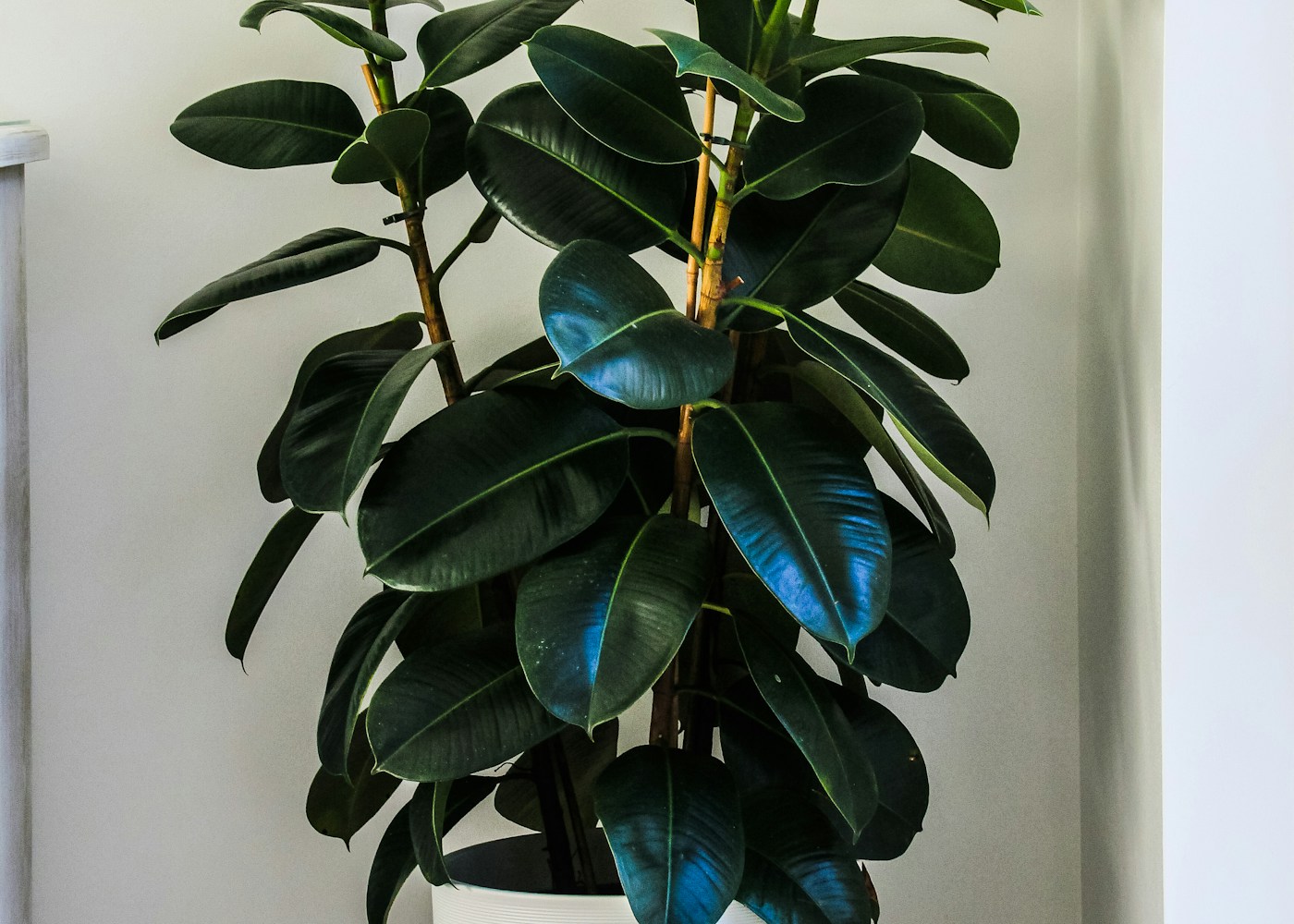
Place one hand under the leaf to spread the pressure and keep the petiole from taking the force. Wipe lightly along the surface without bending the leaf sharply. For a large rubber plant leaf, work in sections rather than gripping the tip and pulling it toward you. New leaves are often more tender than mature ones and may be better left alone until they have hardened. If the cloth catches on rough material, stop and inspect it. Scrubbing repeatedly at a stubborn mark can turn a cosmetic blemish into permanent surface damage.
Hold the leaf gently with one hand while wiping with the other.
Treat fuzzy foliage differently
Hairy leaf surfaces can trap water and are easily damaged by rubbing. A very soft dry brush may be more suitable for some species.
Hairy leaves can trap droplets and are easily bruised by rubbing. A very soft clean brush may remove loose dust from some plants, but the method should follow the species rather than a universal rule. Avoid forcing the brush into young growth or flowers. A cactus with spines and delicate surface coatings also needs different handling from a smooth philodendron leaf. If you are unsure, identify the plant and consult a reliable care guide before wetting it. Leaving a little dust temporarily is preferable to removing a protective surface that the leaf cannot replace.
Confirm species-specific care before using a shower or wet cloth.
Control the shower carefully
A gentle rinse can suit some plants, but excessive pressure damages foliage and waterlogged mix creates a separate problem. Water should not be hot or icy.
If a rinse is suitable, use a gentle flow of room-temperature water and support the container securely. Test the temperature with your hand before directing it at foliage. Strong shower pressure can tear leaves and dislodge small plants. Protect a root ball that does not need more water, and avoid filling sensitive crowns. Let the pot drain fully before returning it to a decorative cover. Do not leave it standing in the sink where someone may later run hot water or detergent over it. The rinse should be a controlled task with a clear end.
Protect sensitive crowns and let the container drain thoroughly afterward.
Dry in a sheltered position
A freshly rinsed plant should not be left in a cold draft or rushed into intense sun. Moving it abruptly can add stress unrelated to cleaning.
After washing, check the leaf axils and crown for trapped water where the species is vulnerable. Gentle air movement and suitable room conditions help surfaces dry without a cold draft. Avoid placing the plant against a hot pane or directly beside a heater to speed the process. A plant moved into unfamiliar intense light may suffer damage regardless of whether droplets are present. Return it to a suitable familiar position once it has drained, and inspect later for accidental bruising or pooled water rather than repeatedly handling every leaf while it dries.
Return it to suitable familiar light after excess water has drained.
Recognize residue that returns
Sticky surfaces or repeated sooty deposits can indicate insects producing honeydew. Cleaning alone will not address the underlying infestation.
Honeydew can make leaves and nearby surfaces sticky and may support a dark sooty coating. Wiping the coating improves appearance but does not remove an ongoing insect source. Inspect protected areas for scale insects, mealybugs, or other likely pests, using a hand lens if needed. Correct identification determines an appropriate control. Do not assume every shiny patch is honeydew, since natural plant exudates and spilled substances can also occur. If the residue returns, document where and how quickly. That evidence is more useful than increasing the strength of the cleaning solution without understanding the cause.
Inspect stem joints and leaf undersides and identify the pest before treatment.
Clean containers and nearby surfaces
Dust and debris collect around the base and on the shelf as well as on leaves. Fallen material can hide insects or remain damp.
Remove fallen leaves and loose debris from the pot rim and surrounding shelf. Wipe the outside of the container while keeping dirty water out of the growing medium. Check the saucer or cover pot for old runoff. Mineral rings on the pot are a separate cleaning task from dust on the leaves and may need different treatment away from the plant. If using a cleaning product on a surface, follow its instructions and allow it to dry before replacing the pot. Keep sprays from drifting onto foliage or into the root zone.
Wipe the pot exterior and remove old drainage water without washing debris into the mix.
Avoid an excessive schedule
A plant does not need aggressive weekly wiping if the leaves are already clean. Frequent handling can bruise delicate growth.
The room sets the likely interval. A plant near an open dusty window may need attention sooner than one in a cleaner sheltered position. Use visible accumulation and routine inspection rather than a fixed aggressive schedule. Frequent handling creates opportunities for tears, broken petioles, and spilled water. You can inspect many plants without cleaning them every time. If dust returns unusually quickly, consider the surrounding source and clean the shelf or window area as well. Maintenance becomes easier when the environment is managed instead of making each plant endure repeated heavy wiping.
Use visible dust and the needs of the room to set a sensible interval.
Make cleaning an inspection habit
The most useful outcome may be noticing a small problem early. New growth, ties, drainage, and leaf condition can all be checked during the job.
Use the opportunity to check ties, supports, leaf undersides, and access to the drainage area. A broad-leaved plant may look glossy while a tight tie cuts into its stem or water stands unseen below the pot. Note anything that needs a separate task rather than trying to solve every issue during cleaning. Once finished, step back and let the plant rest. Judge success by a clean intact surface and useful observations, not by an artificial shine. A gentle method that preserves the foliage is worth more than a dramatic before-and-after photograph.
Keep the process brief and gentle enough that it remains easy to repeat.
Can I use a commercial leaf-shine spray?
Read the label carefully and consider whether it is necessary. Some products are unsuitable for particular foliage, and a glossy finish does not prove that the plant is healthier. Plain gentle cleaning is enough for many smooth-leaved houseplants. Avoid applying oils or household polish as substitutes. If a residue is persistent, identify what it is before increasing cleaning strength. A mineral deposit, sticky insect secretion, and normal leaf surface require different interpretation.
What if the leaves tear while I wipe them?
Stop and reassess the method rather than pressing harder. Delicate leaves, new growth, and weak petioles need more support or a different cleaning approach. A soft brush or gentle rinse may suit some plants, while others need species-specific care. Existing tears do not heal back into an unbroken leaf. Focus on avoiding further damage and keeping the plant in suitable conditions. The purpose of cleaning is maintenance, so the method should not create a larger problem.
When a mark will not wipe away
A pale patch remains after one gentle pass with a damp cloth. Stop rather than increasing pressure or reaching for a stronger household cleaner. Examine whether the area is scarred tissue, a natural pattern, or a deposit that requires identification. Permanent damage is not removable dirt. Photograph it and compare later if the cause is uncertain. A leaf with a small stable scar can still function well, while repeated rubbing may destroy more surface. Successful cleaning includes recognizing when there is nothing useful left to clean and leaving the living tissue intact.
Further reading
Horticultural references for continued learning: