A practical place to begin
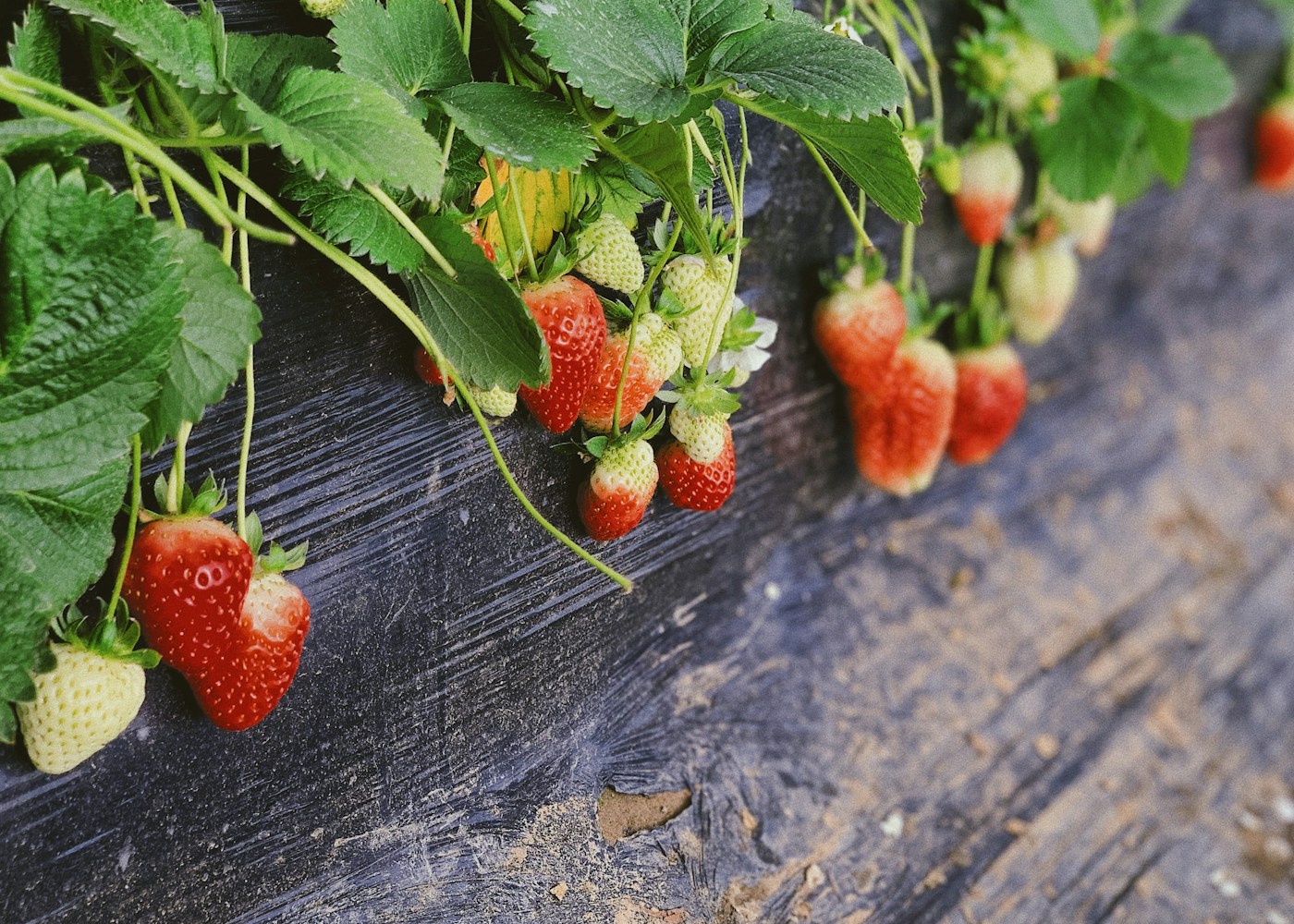
A strawberry plant places its future growth in a small crown between leaves and roots. Bury that crown too deeply and problems begin; leave roots exposed and the plant struggles for a different reason. Container success starts with that planting level, then depends on steady moisture, space, and a realistic expectation of harvest.
Choose a named strawberry variety whose fruiting pattern suits your season and available space. Summer-bearing, repeat-fruiting, and alpine types offer different harvest rhythms, so compare them before buying.
Choose the position and prepare
Use a bright airy position where ripe fruit can be reached and protected. Keep the container away from dirty runoff. If plants are under cover while flowering, consider whether pollinating insects can reach them.
Choose a draining pot with enough volume for each plant and a growing medium suitable for fruit. Avoid cramming every pocket of a decorative tower if the resulting root volumes are too small to water reliably.
Set roots into moist mix while keeping the crown at the surface. Spread healthy roots naturally rather than forcing them upward. Water in gently and inspect the level again after the mix settles.
A manageable care routine
Keep moisture consistent while flowers and fruit develop, without leaving roots waterlogged. Water the growing medium rather than repeatedly wetting ripe berries. Check hanging baskets and exposed towers particularly carefully in wind.
Follow a suitable fruit feed label and account for fertilizer already in the mix. Do not increase concentration to hurry ripening. Leaves, flowers, and fruit all depend on a functioning root system.
Keep fruit clear of dirty surfaces, remove spoiled berries promptly, and inspect runners. Root a limited number of healthy runners only if replacement plants are wanted; otherwise prevent them from exhausting a small pot.
Observe before changing the plan
Misshapen fruit can have several causes, including incomplete pollination. Soft fruit in damp weather needs prompt removal. Identify root and leaf problems before moving runners to new pots, since propagation can carry problems forward.
Start with a few plants of one known variety and record harvest timing and flavour. A second variety in a separate labelled pot makes a useful comparison next season. Judge quality and maintenance, not just the largest berry.
Adapt and renew
Container roots are more exposed to heat and cold than those in the ground. Plan winter protection for the variety and local climate. Plants usually remain worthwhile for a limited number of productive years before renewal becomes sensible.
Pick ripe fruit gently and wash it before eating. Keep labels and records so future replacements are deliberate. Renew declining plants with healthy stock rather than expecting a crowded old container to crop heavily forever.
Choose a fruiting pattern that fits the season
Strawberries differ in when and how they produce fruit. A summer-bearing variety may offer a more concentrated crop, while repeat-fruiting types spread production differently. Alpine strawberries have their own scale and character. Read the description and ask for locally suitable choices rather than buying solely by the size shown in a photograph.
For a small container garden, timing matters as much as yield. A brief generous harvest can be useful if it matches the household’s plans, but less so if it occurs while everyone is away. A longer trickle of berries may suit daily picking. Start with a few labelled plants and record what they actually do in your position.
Avoid crowding several unfamiliar varieties into one pot for comparison. Separate labelled containers make it easier to see which plant flowers and fruits, and to manage any decline. Keep healthy replacement material distinct from plants with unexplained symptoms. The aim is a crop whose identity and performance remain clear enough to repeat. A reliable modest harvest from a known variety is a stronger foundation than a decorative tower filled with unlabelled plants and uncertain root space.
Set the crown with care
The crown sits between the roots below and the leaves above. Plant so roots are covered and the crown remains at the appropriate surface level. Burying it deeply can encourage decay, while leaving roots exposed creates drying problems. Check the level after watering because loose mix may settle.
Use a container with adequate individual root volume and drainage. A strawberry tower can look space-efficient but may contain pockets that dry rapidly and unevenly. Consider whether every plant can be watered, inspected, and harvested. A simple broad pot with fewer plants may be more productive in practice than a complex structure that is difficult to maintain.
When planting bare-root stock, follow the supplier’s instructions and arrange roots naturally rather than folding them tightly upward. Keep plants from drying during the task and water in appropriately. Do not add strong feed in direct contact with roots. Early care should establish a sound plant rather than force immediate fruiting at any cost. If the plant is weak or newly established, follow variety and supplier guidance about managing its first flowers and runners.
Think about flowers before thinking about berries
A flowering strawberry needs suitable conditions for pollination and fruit development. If the pot is under a cover, in a greenhouse, or behind fine mesh, consider whether insects can reach the flowers. Protection that excludes pests can also exclude pollinators. Follow appropriate growing guidance for covered crops rather than assuming the enclosure improves every part of production.
Misshapen fruit can reflect incomplete pollination, but other stresses may also contribute. Inspect the pattern rather than blaming a single insect or nutrient without evidence. Keep water supply steady while flowers and fruit develop. Severe drying followed by heavy watering is harder on the crop than a consistent root environment.
Do not increase fertilizer concentration to hurry ripening. Use a suitable feeding programme at the labelled rate and account for nutrients already in the mix. A healthy leaf canopy supports fruit, but excessive soft growth is not the objective. Observe the whole plant: roots, leaves, flowers, and developing berries. A pot with many flowers and little functional root space may need better growing conditions more than another dose of feed.
Manage runners as a choice
Runners offer a way to produce replacement plants, but they also use the resources of the parent. Decide whether the current pot is for fruit, propagation, or a modest combination. Retain only a manageable number of healthy runners if replacements are wanted, and keep the variety identity attached to them. Remove unwanted runners before they root in neighbouring pots or make the display difficult to inspect.
Do not propagate from a plant with unexplained decline, root damage, or persistent disease symptoms. A young plant is not automatically healthy simply because it is attached to an old one. Healthy purchased stock may be a better reset when the cause of a problem is uncertain.
As the planting ages, review vigour and harvest rather than keeping it indefinitely from habit. Crowded roots, tired mix, and disease build-up can reduce performance. Plan renewal with healthy stock at a suitable local time. Container growing makes that renewal manageable because each plant or pot can be assessed separately. A labelled sequence of healthy replacements is more useful than allowing every runner to form an increasingly tangled collection whose age and identity are forgotten.
Protect fruit without hiding the plant
Keep berries away from dirty surfaces and inspect for spoilage as they ripen. Remove decayed fruit promptly so it does not remain hidden under leaves. If birds or other animals are taking the harvest, use a suitable safe protective method that avoids trapping wildlife and still allows access for care. Check netting regularly rather than leaving it unattended.
Pick ripe berries gently into a clean container and wash them before eating. Do not assume a flawless-looking fruit has avoided contamination. Keep the growing area clear of dirty runoff and animal waste. Treatments, if needed, must be labelled for edible strawberries and used with the required harvest interval.
At the end of the fruiting period, continue appropriate care for perennial plants instead of forgetting the pot once the last berry is picked. Root moisture and seasonal protection still matter. Container roots are exposed to local heat and cold differently from plants in the ground. Record the variety, fruiting period, and practical problems. Next season’s improvement may be a simpler container, better pollinator access, or planned renewal rather than an attempt to fit more plants into the same space.
Renew a strawberry pot deliberately
A container that once cropped well may eventually produce fewer berries despite ordinary care. Begin by checking plant age, crowding, root condition, and variety history. If the plants are old and the pot is congested, a renewal plan may be more useful than increasing feed. If decline is sudden or accompanied by concerning symptoms, seek a diagnosis before propagating runners.
Choose healthy named replacement stock or suitable healthy runners from a known plant. Prepare an appropriate container and set each crown at the correct level. Keep the new planting labelled so its age is clear in future seasons. Do not carry every old plant forward simply because it remains green.
During the next fruiting period, record flowering and harvest dates, moisture management, and any pollination or pest issues. A few notes help distinguish a variety that does not suit the position from a container that was difficult to water. Review the practical harvest too: can ripe fruit be seen and picked without disturbing the plant? Are berries clear of dirty surfaces? A simpler pot arrangement may improve those details more than another decorative tower. The aim of renewal is a healthy manageable crop with a known starting point. That makes future care and replacement decisions easier than maintaining an expanding tangle of plants whose age and identity have been lost.
Further reading
Horticultural references for continued learning: