Decide what the vines should do
Pothos earns its reputation for flexibility, but a vine trailing from a shelf and a vine climbing a support develop into different displays. Both are Epipremnum aureum, and both can remain attractive for years. The difference is how the stem meets light, how you manage its length, and whether the growing tip can keep extending without dragging across the floor. Before buying another hanging basket, decide whether you want a curtain of small leaves, a compact pot, or an upward-growing specimen.
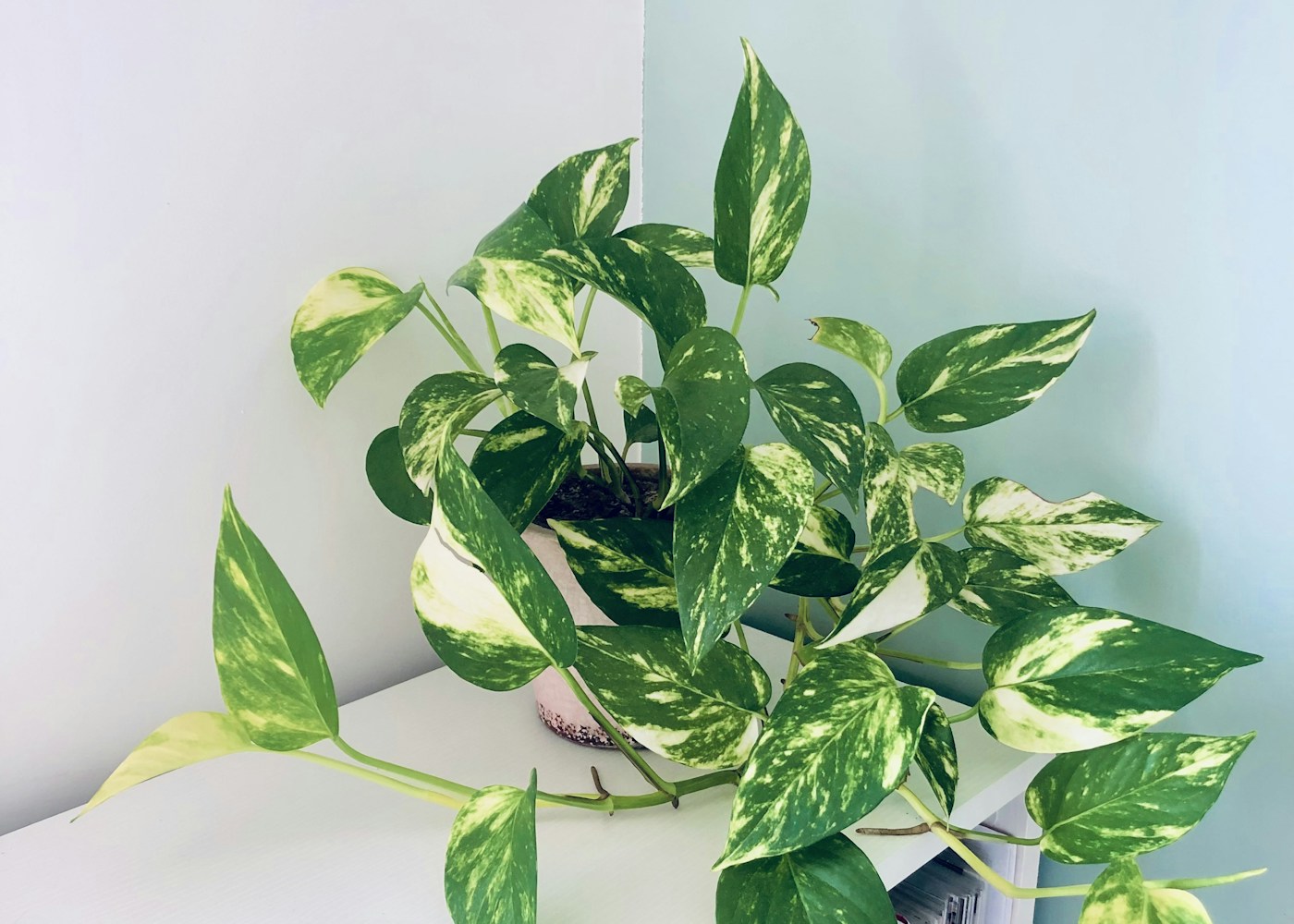
Follow one stem from its base to the newest leaf. The joints are nodes; each can carry a leaf, an aerial root, and a dormant bud. Those nodes explain most practical pothos care. They provide rooting points for cuttings, attachment points for climbing, and possible locations for branching after pruning. A long bare stem can be shortened, but the empty spaces between nodes cannot produce new leaves simply because the plant receives more fertilizer.
Give variegation enough daylight
A bright position with indirect daylight generally keeps the plant denser than a remote dark corner. Green cultivars tolerate reduced light better than strongly variegated forms, but tolerance should not be mistaken for vigorous growth. In a dim position, the stem may produce smaller leaves separated by longer intervals. A vine can remain alive while gradually losing the full appearance that made the plant appealing. Improving its light is usually more effective than trying to water it into growth.
Check the actual exposure at leaf level. A hanging plant close to a window may still have its crown above the bright opening, leaving the roots and oldest stems in shade. Lowering the hanger can improve the distribution of light. Protect foliage from abrupt exposure to strong midday sun, particularly if it previously grew in a shop interior. Pale dry patches on exposed leaves may indicate scorch; move the plant back or filter the beam rather than removing all light.
Build a pot that is full at its base
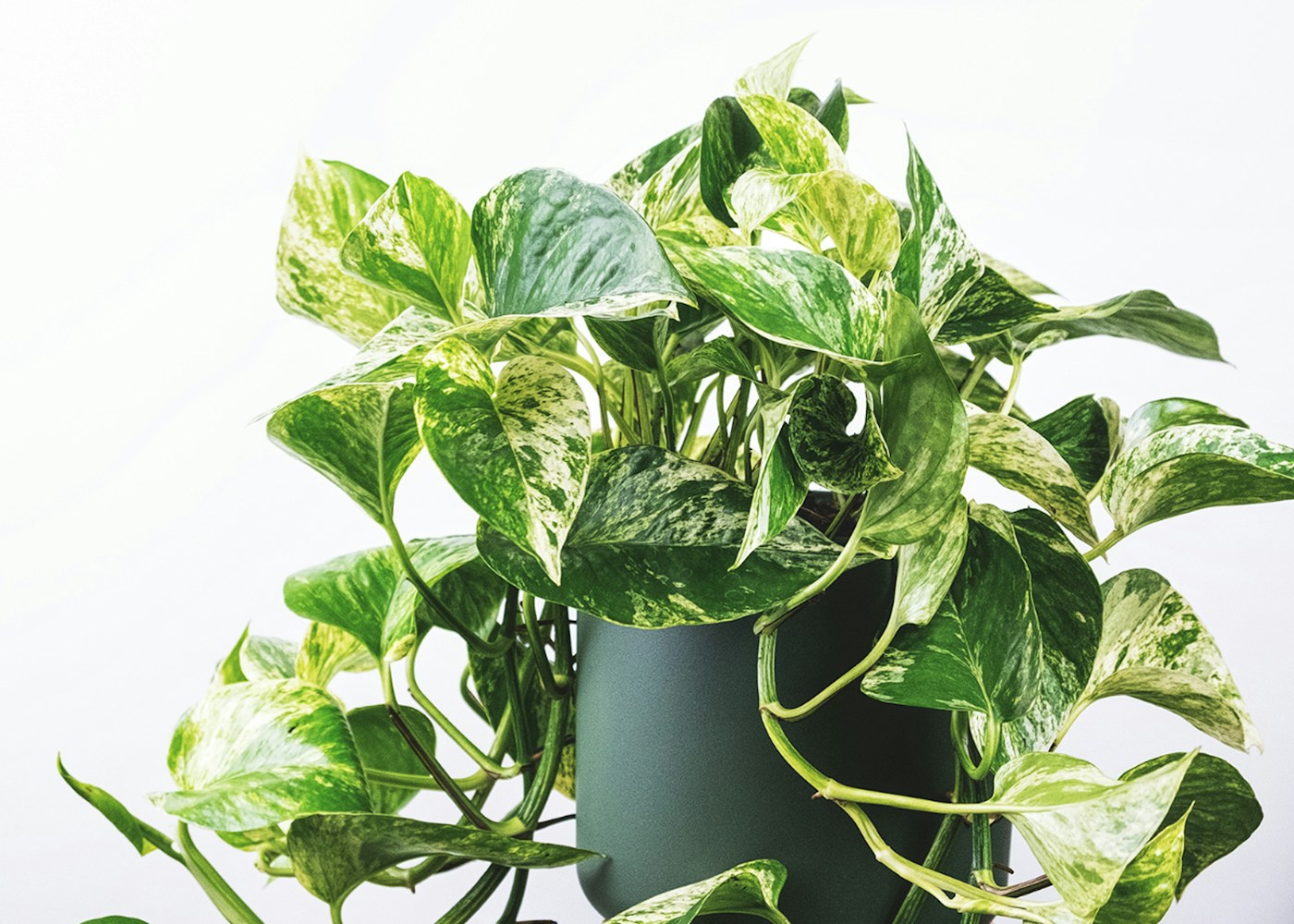
Many shop-grown pothos pots contain several rooted cuttings. Their fullness comes from multiple growing stems, not one vine naturally branching at every joint. If your plant has one long stem and a thin crown, pruning and replanting healthy cuttings can rebuild that structure. First correct poor light or root problems. Adding new cuttings to a persistently wet, deteriorating pot merely exposes the young roots to the same conditions that weakened the original plant.
For a fuller display, take several short sections rather than one enormous cutting. Each section needs a node; a leaf alone does not provide the growing structure required for a new vine. Remove the lowest leaf if it would sit below the rooting surface. Keep the remaining leaf above water or potting mix and mark the growing direction if using leafless stem sections. A clean cut makes the setup easier to manage and reduces crushed tissue that could decay.
Root cuttings without turning it into a production line
Water propagation offers a clear view of root formation. Use a clean container, immerse the nodes rather than the leaves, and replace the water when it becomes cloudy. Keep the vessel in bright indirect light. Once a cutting has a useful group of roots, transfer it to a small pot with fresh, airy mix. There is no single root length that guarantees success; the practical goal is a root system that can support the cutting without being difficult to place.
Direct rooting in moist potting mix avoids a later change from water to soil. Insert a node so it contacts the mix, support the cutting if necessary, and maintain even moisture without keeping the pot saturated. A loose clear cover can slow moisture loss, but inspect it for condensation and decay and ventilate when needed. Do not place a covered cutting in direct sun, where the small enclosure can heat rapidly. Established growth is a better sign than one leaf merely remaining green.
Choose a climbing system you will maintain
To grow pothos upward, use a support with a surface that roots can contact. A board, textured pole, or suitable trellis can direct the vine, although smooth narrow canes mainly provide mechanical support. Fasten the stem loosely at intervals with soft ties. Keep leaves free to turn toward light, and check ties as the stem thickens. A dry decorative pole does not need to become a complicated moist moss system unless that is the method you want to manage.
Climbing growth can eventually produce larger foliage under suitable conditions, but a support alone does not guarantee dramatic mature leaves. Light, the plant's maturity, and continuous healthy growth also matter. Do not glue vines directly to painted walls or assume aerial roots will leave every finish untouched. Use a freestanding support where possible, and leave enough room to inspect the back of the foliage. A living screen is attractive only if it can still be watered, cleaned, and moved.
Water according to the whole root ball
Allow the upper part of the potting mix to dry before the next thorough watering. Check more deeply if the pot is large or the outer surface dries unusually fast. A pothos in a warm hanging basket may need water sooner than one in a cool floor pot, even if both were watered on the same day. The relevant comparison is the moisture around the roots, not the calendar date or the dry appearance of a decorative top dressing.
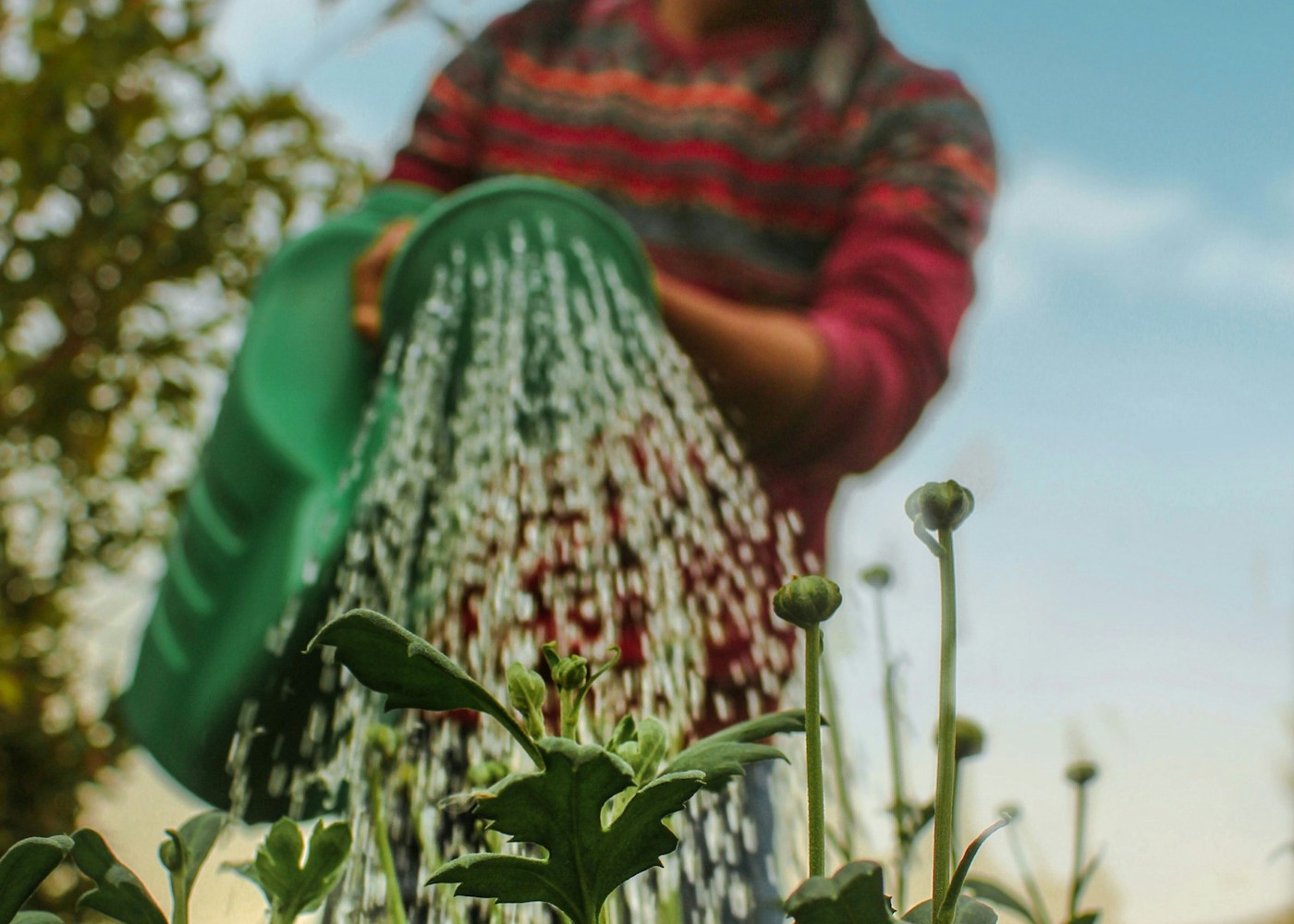
Water slowly around the surface, let excess drain, and empty the outer container. Repeated small splashes can keep the upper layer damp while leaving part of the root ball dry. At the other extreme, standing water deprives roots of air. A wilted pothos with dry, light mix needs a different response from a wilted pothos sitting in heavy wet compost. In the second case, inspect the drainage and roots before adding another drink.
Repot only when the current container is limiting growth
A tightly rooted pot may dry extremely quickly or contain roots circling in thick layers around the outside. Move up a modest size when the root system genuinely fills the available space. Avoid placing a small rooted cutting into a large decorative planter full of mix. It is harder to judge the moisture in that unused volume, and the newly developing roots are easily kept too wet. A nursery pot inside a larger cachepot often offers a more manageable arrangement.
Use a clean pot with drainage holes and a fresh houseplant mix that holds moisture while remaining open. Replant at the previous depth. If you are combining established rooted cuttings, arrange the stems around the pot so future vines have room to spread rather than crowding every node into the center. Water to settle the mix and then allow a normal drying period. Freshly repotted roots do not need an immediate heavy fertilizer dose to recover.
Prune for the shape visible from the room
Step back and look at the entire display before cutting. A few very long vines can make a hanging pothos look unbalanced while hiding the shorter growth behind them. Shorten selected stems just above a node on the portion remaining in the pot. This leaves a plausible point for a new shoot. Cut gradually, checking the silhouette after each important stem, rather than trimming every vine to exactly the same length like a hedge.
If long stems have bare sections, you can remove those stretches and propagate suitable healthy pieces separately. Do not expect old leaf scars to refill along an otherwise unchanged vine. An alternative is to coil a flexible stem gently over the surface and pin a node into contact with moist mix, allowing it to root while still attached. Use this only where the crown has space and airflow; a dense pile of wet stems is difficult to inspect.
Sort out yellow leaves and unwanted visitors
One yellow oldest leaf can be ordinary aging, especially on a heavily shaded inner stem. A run of yellow leaves combined with persistent wetness deserves a root inspection. Crispy edges and repeated wilting may point toward drying, while a crust on the pot rim suggests accumulated mineral salts. Look at the pattern before applying fertilizer. Nutrient products do not correct damaged roots, and adding more salts can complicate a problem that already involves excessive feeding or poor drainage.
Inspect leaf undersides, nodes, and the places where stems rest on supports for scale or mealybugs. Isolate a newly affected plant so vines do not bridge into neighboring foliage. Clean accessible pests off small infestations and use treatments only according to their labels for indoor ornamental plants. Keep pothos away from pets and children who might chew it; its tissues contain irritating calcium oxalate crystals. Hang trailing stems beyond reach as well as the main pot.
A sensible reset for an overgrown shelf
Consider a pothos with three long vines, small leaves near their tips, and a nearly bare pot on a high shelf. Lower it closer to the window's useful light, check that the root ball drains, and shorten one vine for cuttings. Root those pieces while the remaining vines keep the plant's appearance. Once they establish, plant suitable rooted pieces around the pot or start a separate fuller pot. This staged approach produces a practical display while preserving enough healthy foliage to support continued growth.
Before sending a pothos vine along a bookshelf, check how you will remove it for inspection. Stems threaded behind heavy furniture can become trapped, and leaves may be crushed when books move. Use removable clips on a suitable support, leaving a little slack as each section grows. Keep vines away from electrical equipment and lamps that become hot. Plan a stopping point where you can prune conveniently, rather than letting the stem disappear into a space you cannot reach. A reachable vine is easier to keep attractive than one that grows out of sight.
Further reading
Horticultural references for continued learning: